
Are Health Trackers Good for Your Posture? A Chiropractor’s Perspective in Vancouver

Updated: Jul 30
Health trackers like smartwatches and fitness bands are more popular than ever—but are they actually helping your posture and spinal health?
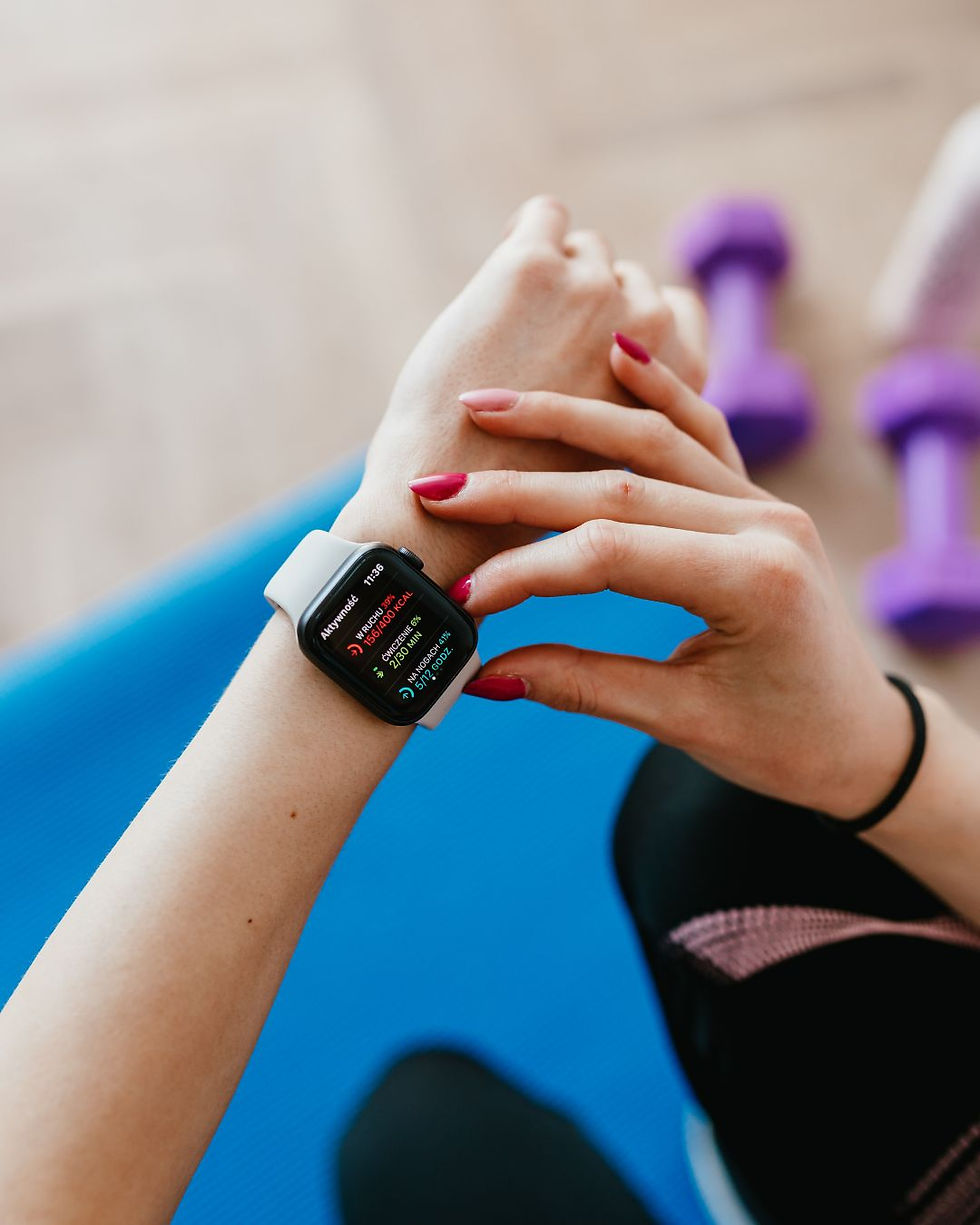
Health trackers can support your daily habits—but they don’t measure how your body moves or aligns throughout the day.
From a chiropractic perspective, many wearable devices focus on steps and activity levels but often overlook something just as important: how your body moves and aligns throughout the day. This is something a chiropractor in Vancouver often evaluates when addressing posture-related pain.
Here’s a breakdown of the main types of health trackers and how they stack up from a chiropractic point of view.
Smartwatches & Fitness Trackers: Do They Help Posture or Cause Tech Neck?
These are the most commonly used devices, offering features like step tracking, heart rate monitoring, and reminders to move.
Chiropractic Pros:
● Encourage regular movement, helping prevent stiffness caused by prolonged sitting
● Provide reminders to stand or stretch, which can reduce spinal stress
● Promote general activity, supporting joint mobility and circulation
Chiropractic Cons:
● Frequent screen checking can contribute to forward head posture (“tech neck”)
● They track movement quantity, not movement quality
● May give a false sense of health if posture and biomechanics are poor
Smart Rings for Sleep & Recovery: Do They Improve Spinal Health?
Smart rings focus on sleep, recovery, and stress metrics rather than active movement.
Chiropractic Pros:
● Emphasize sleep quality, which is essential for spinal disc hydration and tissue recovery
● Provide insights into stress levels, which are relevant to nervous system balance
● Minimal interaction reduces device-related posture strain
Chiropractic Cons:
● Offer little to no feedback on posture or movement habits
● Data is passive, requiring interpretation without guidance
● Users may become overly focused on scores rather than physical sensations
Heart Rate Monitors & Training Devices: Benefits and Limitations for Spinal Health
Often used by athletes, these devices provide highly accurate heart rate data during exercise.
Chiropractic Pros:
● Help optimize training intensity, reducing the risk of overtraining injuries
● Support conditioning that strengthens muscles around the spine
● Useful for structured rehabilitation or performance programs
Chiropractic Cons:
● Do not assess posture or biomechanics during activity
● Not worn throughout the day, so they miss habitual posture issues
● May encourage intensity without proper alignment or technique
Posture Corrector Devices: Do They Actually Work?
These devices are designed to detect slouching and alert the user to correct their posture.
Chiropractic Pros:
● Increase awareness of poor posture habits
● Provide real-time feedback for behavioral correction
● Can be especially helpful for desk workers
Chiropractic Cons:
● May create reliance on external cues instead of internal body awareness
● Do not address underlying causes, such as muscle imbalances or joint restrictions
● Long-term adherence can be low due to discomfort or inconvenience
The Chiropractic Perspective: Big Picture
From a chiropractic standpoint, health trackers can be helpful—but only as supportive tools.
Where They Add Value:
● Encouraging consistent movement throughout the day
● Promoting better sleep and recovery habits
● Increasing awareness of sedentary behavior
● Supporting stress management
Where They Fall Short:
● They do not evaluate spinal alignment or joint function
● They cannot detect or correct movement dysfunctions
● They may shift focus toward numbers instead of how the body actually feels and functions
While wearable devices can support healthy habits, they cannot replace a full chiropractic assessment of posture, spinal alignment, and movement patterns.
Which one to choose?
Choosing the “best” health tracker really depends on your goal—but based on current 2026 data and a chiropractic perspective (movement quality, posture, recovery), there are a few clear winners.
Experts consistently say there is no single best device for everyone—it depends on whether you prioritize movement, recovery, accuracy, or simplicity.
Below is a practical breakdown with top picks:
Best Overall (Balanced Health + Movement)
Garmin vívoactive 5 GPS Smartwatch
Why it’s best:
● Tracks movement, heart rate, sleep, stress
● Long battery life (better than most smartwatches)● Strong for both daily health and exercise
From a chiropractic lens:
This is the best balance of movement reminders + recovery tracking, which supports spinal health habits.
Best for Simplicity & Daily Movement
Fitbit Inspire 3 Fitness Tracker
A simple, affordable tracker focused on steps, sleep, and basic health insights.
Why choose it:
● Easy to use
● Great for building consistency
● Encourages regular movement
Best if your goal is:
“Move more, sit less” (a major chiropractic priority)
Best for Recovery & Sleep (Smart Ring)
Oura Ring 4 Smart Ring
A premium smart ring focused on sleep quality, recovery, and readiness insights.
Why it stands out:
● Excellent sleep and recovery tracking
● Minimal distraction (no screen)
● Tracks stress and nervous system balance
Chiropractic angle:
Sleep = disc hydration + tissue recovery, making this a strong complement to care
Best for Fitness & Performance
Garmin Forerunner 265
A high-performance GPS watch designed for runners and serious training.
Why it’s great:
● Advanced training metrics
● Excellent accuracy
● Built for structured exercise
But note:
Great for workouts—but doesn’t fix posture or daily habits.
Best Budget Option
Samsung Galaxy Fit3
An affordable tracker with solid features and long battery life for everyday use.
Why it’s popular:
● Very affordable
● Long battery life
● Covers basics well
Good for beginners building awareness.
So… which is actually best?
From a chiropractic perspective:
● Best overall: Garmin vívoactive 5 → balances movement + recovery
● Best for posture habits: Fitbit Inspire 3 → simple movement reminders
● Best for recovery: Oura Ring → sleep & nervous system focus
● Best for athletes: Garmin Forerunner 265 → performance tracking
The key insight:
The “best” tracker is the one that helps you:
● Move frequently
● Avoid long sitting
● Sleep better
● Stay aware of your body (not just numbers)
Final Thoughts
Health trackers can play a useful role in supporting spinal health, but they are not a substitute for proper movement, posture awareness, or professional care.
If you’re using a health tracker and still experiencing neck pain, back discomfort, or poor posture, working with a chiropractor in Vancouver can help identify underlying movement patterns that wearable devices can’t detect.
The most effective approach is to use these devices as a guide, not a decision-maker.
Focus on:
● Moving frequently and intentionally
● Maintaining good posture during daily activities
● Prioritizing recovery and sleep
● Listening to your body’s signals
Health trackers can help support that goal!
Book an appointment to get a clearer understanding of your posture, movement patterns, and spinal health.


Comments